Unit Economics: Are You Actually Making Money Per Sale?
A story about coffee, clueless founders,
and the metric that separates real businesses from hype.
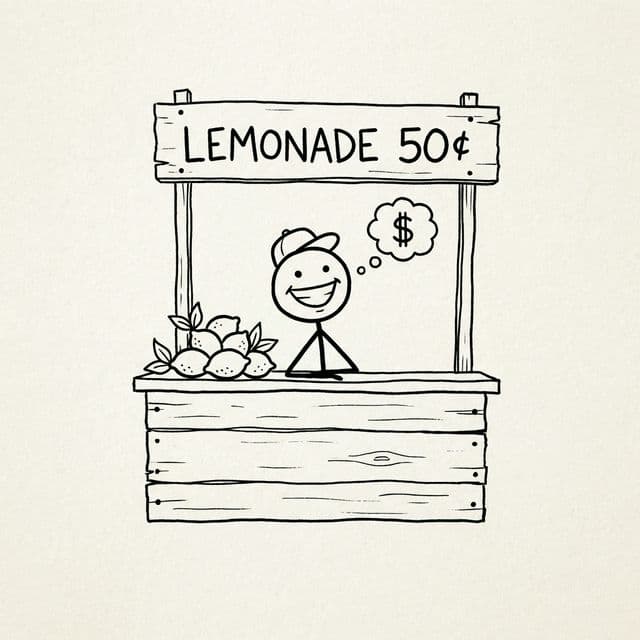
“I sold 1000 cups... so where's the money?”
Remember Sticky? The stickman with the coffee cart near campus? Last episode, he figured out EBITDA and felt like a genius.
So Sticky decides to grow. He runs Instagram ads. Prints flyers. Offers a “first coffee free” promo. Gives loyalty cards. He even pays his friend Jake $50 to hand out samples at the parking lot.
The result? His sales jump from 200 cups a day to 1,000 cups a day. He's selling coffee like crazy. Everyone knows his cart now. His Instagram follower count hits 5,000.
But at the end of the month, Sticky checks his bank account and... it's lower than before.
— Sticky, staring at his bank app at 2 AM
His friend Max walks over, takes one look at the numbers, and says:
— Max, the MBA friend who ruins everyone's day
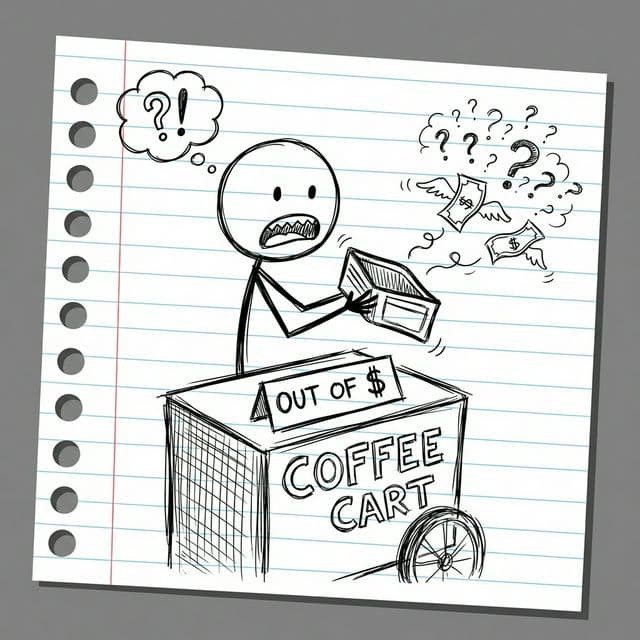
Sticky after checking his bank account 💀
Unit economics is simple in concept. It answers one question:
do you make money or lose money?
That's it. No complex formulas. No spreadsheet wizardry. Just one question: Is each sale profitable on its own?
If you sell a cup of coffee for $3 and it costs you $2.50 to make and serve it, you make $0.50 per unit. Good. Sell a million cups and you'll be rich.
But if it costs you $3.50 per cup (including all the marketing, promos, free samples)? You lose $0.50 on every sale. Sell a million cups and you'll be bankrupt.
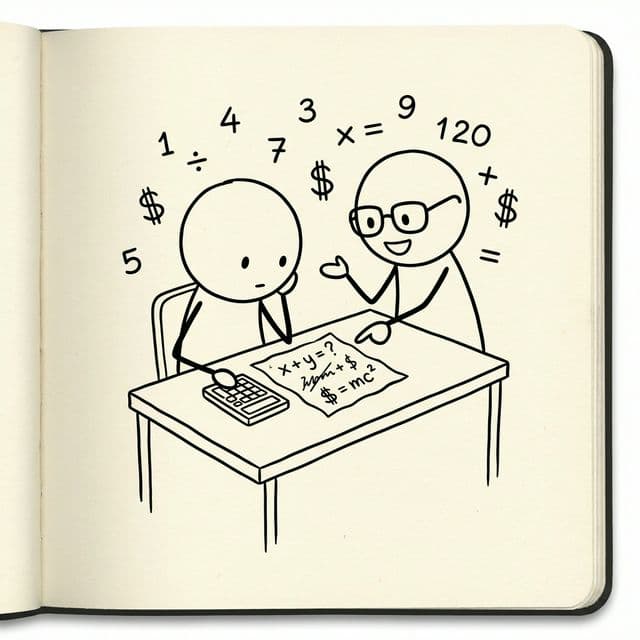
Max explaining the numbers Sticky didn't want to hear 📊
Max sits Sticky down and they go through the numbers. Here's what Sticky's month looks like selling 1,000 cups/day for 30 days:
$90,000 in revenue! Sticky almost does a victory dance. But Max says, “Now let's look at what each cup actually costs you.”
Cost per cup: $3.50
Loss per cup: −$0.50
Sticky is literally paying people to drink his coffee. Every cup he sells, he loses fifty cents. And he was celebrating selling more of them.
— Sticky, having an existential crisis
Max nods. “Welcome to broken unit economics. You're not running a business — you're running a charity with good branding.”
Max introduces Sticky to the first big concept: CAC — Customer Acquisition Cost.
Sticky spent the following on marketing last month:
And how many new customers did he actually get from all that? Not repeat visitors — genuinely new people who tried his coffee for the first time.
Answer: about 400 new customers.
Sticky stares at the number. “So I'm paying $5 to get someone to buy a $3 coffee? That's like paying someone to take your money.”
Max says, “Well, it depends. If that customer comes back 10 times, it might still be worth it. That's where LTV comes in.”
LTV stands for Lifetime Value (sometimes called CLV — Customer Lifetime Value). It answers:
Sticky checks his data. The average customer buys coffee 3 times per week and sticks around for about 4 months (one semester — college students leave).
Now we're getting somewhere. Each customer brings in $144 over their lifetime. And it costs $5 to acquire them. That ratio is:
Sticky pumps his fist. “So my CAC is fine?”
Max sighs. “Your CAC is fine. Your problem isn't acquiring customers. It's that you're losing money on every cup you serve them. Your cost of goods is too high. LTV doesn't help if each sale is unprofitable.”
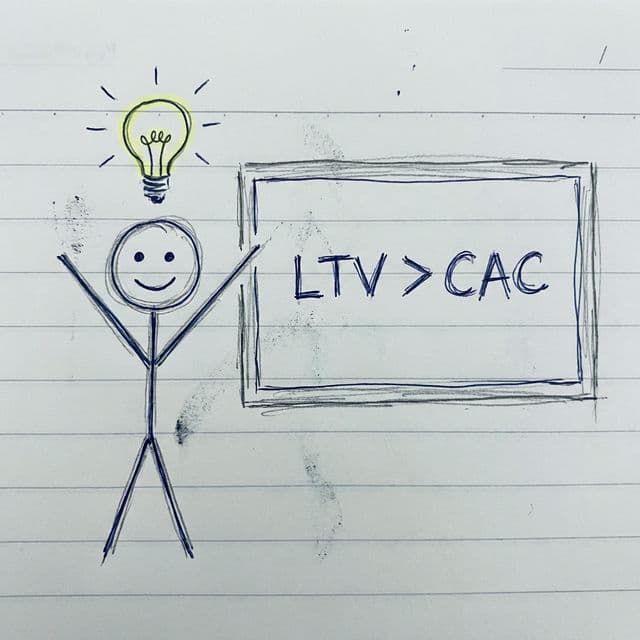
💡 The LTV > CAC lightbulb moment
Max grabs a napkin and draws Sticky a simple plan. There are only three ways to fix unit economics:
Sticky decides to do all three. Here's what changes:
Cost: $3.50/cup
CAC: $5.00
Result: −$0.50 per cup
Cost: $2.00/cup
CAC: $2.00
Result: +$2.00 per cup
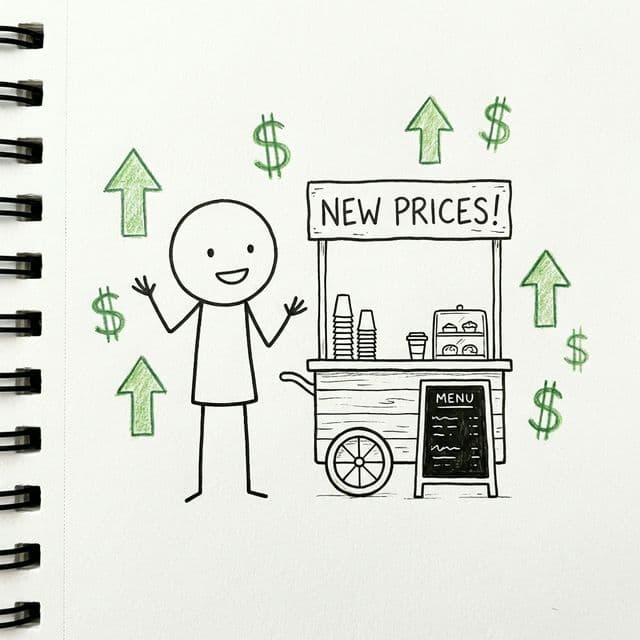
Sticky raises the price to $4 (adds oat milk as a premium option). Buys beans wholesale, saving 40%. Stops running random ads and instead puts up a simple “Buy 5, Get 1 Free” loyalty card.
He also starts sending proper invoices to his wholesale bean supplier and his catering clients — so he can actually track what comes in and what goes out.
His daily sales dip from 1,000 to 600 cups. But here's the plot twist — he's now making $2.00 profit on every single cup.
vs.
1,000 cups × −$0.50 loss = −$500/day
— Sticky, finally getting it
Sticky 2.0 — less volume, way more profit 💰
Let's look at some hypothetical scenarios to see unit economics in the wild.
📦 SnapBox — Same-Day Delivery Startup
Imagine a delivery startup called SnapBox that charges $5 per delivery. Sounds good, right? But each delivery costs them $8 in driver pay, fuel, and packaging.
They're losing $3 on every order. Their plan? “We'll make it up with volume!” Spoiler: they won't. They raised $10 million in funding and burned through it in 18 months.
🎓 LearnPro — Online Course Platform
Now imagine LearnPro, an online education platform. They spend $30 on ads to acquire a student. Each student pays $15/month and stays for an average of 8 months.
LTV = $120. CAC = $30. LTV:CAC = 4:1. And their cost to deliver one course? Nearly $0 (it's pre-recorded video). Every additional student is almost pure profit. That's beautiful unit economics.
Cost/order: $8
Unit economics: −$3
CAC: $30
Unit economics: +$90
✏️ The Bottom Line
Revenue is vanity. Profit is sanity. And unit economics is the reality check every founder needs before they scale. Sticky learned it the hard way — don't be Sticky.
Next time someone brags about “10x growth,” ask them one question: “Yeah, but do you make money on each sale?” Watch their face. It tells you everything.